AI Engineer, Data, AI & Product
Atlys
- when
- Present
I build the AI brains and agents behind Atlys: systems that read documents and conversations, make a decision, and take the next step without a human in the loop.
Loading
I'm an AI engineer at Atlys, building AI agents on the Data, AI & Product team. Since 2025 I've built multimodal RAG chatbots for The Trav Story, an emergency-vehicle routing system on PostGIS, a fraud-detection ensemble and a marine-species classifier at 98.87% accuracy.
I also spent a remote internship at Brndo migrating its site to Next.js and winning back 9.1% of a client's abandoned checkouts. I write Python and TypeScript every day, ship with Docker, and care as much about the API contract and the database schema as about the model.
Plate 1How I structure agents. Atlys specifics are not public.
Agents in production.I build AI agents at Atlys and built the multimodal RAG chatbots behind The Trav Story (LangChain, FastAPI, vector databases).
Real-time systems.DIVERT routes first responders around traffic with OSRM, PostGIS and WebSocket tracking at about 500 ms latency.
Models that hold up.OceanBot: 98.87% validation accuracy across 31 species. YVOO: 94% with an XGBoost and logistic-regression ensemble.
Atlys
I build the AI brains and agents behind Atlys: systems that read documents and conversations, make a decision, and take the next step without a human in the loop.
Brndo · Ads and marketing
My first fully remote role: two months at Brndo, an ads and marketing agency, working across SEO, web engineering and e-commerce growth for Brndo and its clients.
The Trav Story · AI-unified travel platform · Bhubaneswar
The Trav Story plans a trip the way a well-travelled friend would: ask a few questions, propose an itinerary, and book it without twelve open tabs. I designed and built the platform.
DeuxStem · Ed-tech non-profit
I started DeuxStem in 2020 to give students outside big cities the STEM exposure I had to find on my own. It grew to an audience of more than 2 million worldwide.
GDG KIIT
I work on growth: getting the right people into the room and keeping them there.
Startup Grind KIIT
Selected to the founding team building the campus startup community: founder talks.
Microsoft Learn Student Ambassadors (MLSA)
Implemented DQN and PPO with Stable-Baselines3 and trained an agent to play Super Mario Bros at an expert level. Taught AI, ML and cloud basics to peers.
E-Labs
Guided student research projects in AI and ML and mentored juniors.
KIIT University
Focus: Computational mathematics, distributed backends, ML pipelines, graph and spatial algorithms.
Delhi Public School
Focus: Competitive programming and my first real software.
The most productive stretch of my working life so far was two months at Brndo in 2026: fully remote, as an e-commerce intern on SEO and software. I set up somewhere calm and clean, and the time I’d have spent getting to work went into the work itself. No commute, and a schedule shaped around the hours when I think best.
It shows in what shipped. I moved brndo.in from WordPress to a Next.js app with server-side rendering and Schema.org markup, and wired Meta Pixel into the lead pipeline. I built Shopify Liquid product modals for a cricket-equipment brand’s buyers. I ran predictive analysis on a client’s YouTube metrics and raised viewer engagement by 12%. And the WhatsApp reminder flows I built won back 9.1% of abandoned checkouts.
That’s the setup I’m looking for next: a remote AI engineering role on a team that trusts people with outcomes.
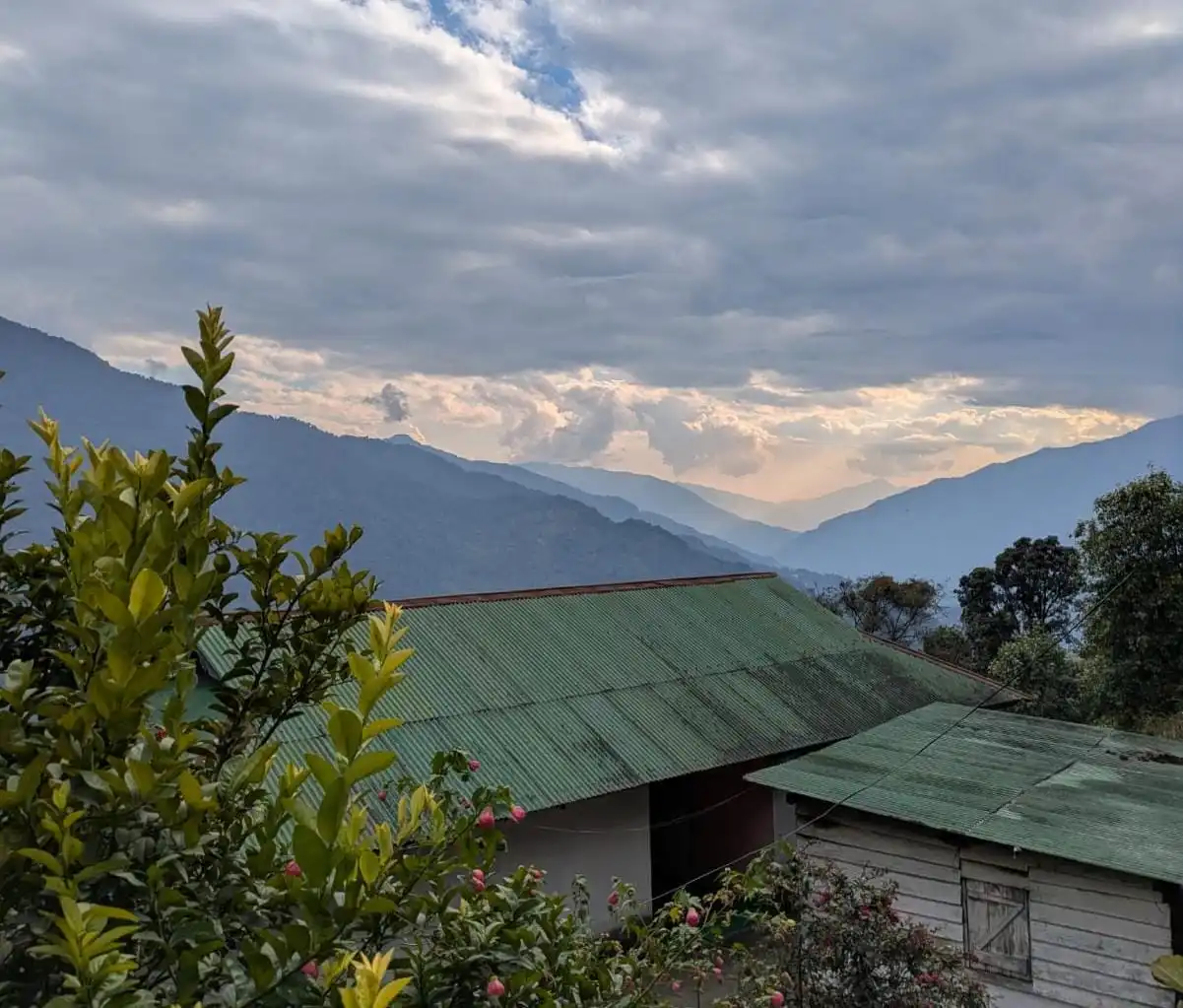
A quiet place in Sikkim. My desk photo is coming.
| My time zone | IST, UTC+5:30 |
|---|---|
| My working day | To be confirmed |
An e-commerce internship in SEO and software engineering, done fully remote for Brndo, an ads and marketing agency, and its clients.
| Result | What it was |
|---|---|
| WordPress → Next.js | I rebuilt brndo.in as a Next.js single-page app with Tailwind and React, connected to Zoho CRM’s APIs. |
| SSR + Schema.org | Server-side rendering and structured data, so search engines can read every page. |
| Meta Pixel | Inbound leads tracked from the first visit through the pipeline. |
| Shopify Liquid | Product modals that give a cricket-equipment brand’s buyers a clean, uncluttered view. |
| +12% | Viewer engagement on a client’s YouTube channel, after my predictive analysis of its metrics. |
| 9.1% | Abandoned checkouts won back by WhatsApp reminder flows I built on a WhatsApp marketing platform from on-site behaviour and user segments. |
| 21% | An e-commerce client’s revenue driven by those reminder campaigns. |
All of it shipped from a quiet room, on a schedule I set.
I own the whole path.Schema, model, API, deployment, interface. Fewer hand-offs means fewer meetings to coordinate them. At Brndo that meant taking brndo.in from WordPress to Next.js, with the SEO and lead tracking built in.
I write it down.Briefs before code, pull requests with context and a test plan, decisions recorded where the team can find them. This site ships with its own architecture document; my LeetCode automation ships with a step-by-step guide.
I manage myself.Solo expeditions are planning exercises with real consequences: route, food, weather windows, turn-back times. I bring the same habits to deadlines.
Problem.Planning a trip means hours across blogs, maps and booking sites, and the result still misses what the traveller wanted.
Approach.Multimodal LLM chatbots built with LangChain and FastAPI take the brief, grounded in the platform's own travel data through RAG pipelines on vector databases. The frontend, backend, database and neural models run as distributed cloud services that talk over APIs. Supabase PostgreSQL holds trip state, with server-side rendering for fast retrieval; Docker builds and GitHub workflows ship it.
Result.Best Startup Idea, KIIT University.
System diagram of The Trav Story
Screens to come: The Trav Story, from a chat to an itinerary
Problem.First responders lose critical minutes at red lights and in jams that a routing app can see coming.
Approach.OSRM and PostGIS compute the route and automatically generate diversions of about 800 m around congestion. A Random Forest model predicts the vehicle's ETA at each junction so signals can be pre-empted in time. Dockerised FastAPI and Redis microservices track the vehicle over WebSockets with about 500 ms latency.
Result.Working pipeline built as the Smart City Infrastructure module of my minor project.
System diagram of DIVERT
Problem.The best opportunities for students are scattered across hundreds of sites and usually found a week after the deadline.
Approach.A Next.js 14 portal on Supabase (PostgreSQL) with a navigation-centric routing architecture: server-side rendering for a fast first load, then an interactive Framer Motion "Cyber-Glass" interface rendered on the client. An automated TypeScript ingestion pipeline sanitises and upserts JSON records into a normalised relational schema with strict unique constraints, so a listing appears once and only once. Open Graph metadata, XML sitemaps and schema.org Event JSON-LD make each listing eligible for Google rich results.
Result.Live at accolades.site; 100% data integrity, with zero duplicate listings by construction.
System diagram of Accolades
Screens to come: Accolades search results
Problem.Marine survey data arrives as unlabelled images and free-text logs, and both are slow to process by hand.
Approach.Transfer learning on InceptionV3 with a custom head (Dense 1024 ReLU, Dense 31 softmax), L2 regularisation at 0.001 and Dropout at 0.4 to curb overfitting. A language processor with 15+ regular expressions extracts coordinates from text. A Power BI dashboard shows the results.
Result.98.87% validation accuracy across 31 species, 12 points above the baseline. Runner-up (2nd rank) at the PIC conference.
System diagram of OceanBot. The class strip is drawn evenly; it shows no per-species accuracy.
Screens to come: the OceanBot dashboard
Problem.Lenders need to spot fabricated credit histories and inflated incomes without real fraud data to learn from.
Approach.I synthesised behavioural datasets, ran EDA to find the signals, and trained an ensemble of XGBoost and logistic regression. Models run behind secured FastAPI endpoints, Dockerised and deployed on Render with auto-scaling.
Result.94% and 92% validation accuracy. 1st rank at the PIC conference. Qualified for Smart India Hackathon 2025.
System diagram of YVOO
Screens to come: the YVOO scoring screen
Problem.Smallholder farmers often notice disease too late and water on habit rather than need.
Approach.A convolutional neural network classifies leaf images by disease; an LSTM forecasts water need from time-series data to schedule irrigation.
Result.Winner, New York Academy of Sciences Junior Academy challenge.
System diagram of KANAD. Illustrative. Inputs, crops and dataset are not public yet.
Photo to come: the KANAD prototype
New York Academy of Sciences
KANAD, crop-disease detection and irrigation scheduling with CNNs and LSTMs.
KIIT University
The Trav Story, AI travel platform.
Smart India Hackathon
YVOO, CIBIL and income fraud detection.
PIC conference
YVOO (CIBIL and income fraud detection) took 1st; OceanBot (98.87% species classification) was runner-up.
MIT LaunchX
Awarded a full ride, in the top 8% of applicants. Co-founded Sedu, a game-based health-education startup, with a global cohort; it made $785 in revenue across 4+ countries.
International Astronomical Search Collaboration
Through DeuxStem's search campaigns, VT60 and UF78 among them.